
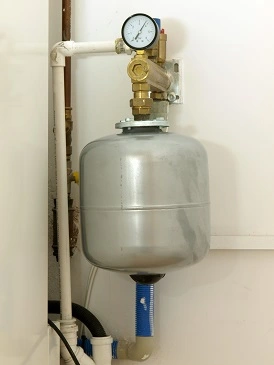
If you have a water heater in your home, you might have seen a smaller, metal tank sitting right next to it. This is called an expansion tank. Many people wonder what this small tank does, and the answer is simple: it is a safety device that keeps your entire plumbing system from breaking.
In many places, having an expansion tank for water heater required by code is a law. This is not just a suggestion; it is a serious rule put in place by plumbing experts to protect your home. Why? Because when water gets hot, it grows. This growing water needs a safe place to go. If it has no place to go, the pressure builds up and breaks things.
As an expert plumber, I can tell you that ignoring this small tank can lead to big problems—like pipes bursting or your water heater failing early. We will walk through the simple reasons why the code requires it and how you can check yours to make sure your home is safe.
1. The Simple Problem: Why Water Grows (Thermal Expansion)
The main reason why an expansion tank is required is because of a simple science fact: Thermal Expansion.
Here is how it works:
- Cold Water is Small: When water is cold, it takes up a certain space.
- Water Heater Starts: When your water heater turns on, it heats that cold water up, maybe to 120 degrees or higher.
- Hot Water is Big: When water gets hot, it actually grows in volume. It takes up more space than it did when it was cold.
This extra water needs a place to go. If you have an open system (where the water can flow back to the city pipes), it is not a problem. But most modern homes have a Closed-Loop System.
What is a Closed-Loop System?
A Closed-Loop System means that the water can only flow into your house, but it cannot flow back out to the street. It is trapped inside your home’s pipes.
The device that creates this closed system is usually a Pressure Reducing Valve (PRV) or a Backflow Preventer.
- Pressure Reducing Valve (PRV): This valve is installed where the main water line enters your house. Its job is to lower the high pressure coming from the city pipes down to a safe level for your home (like 50 to 60 PSI). However, by blocking high pressure from outside, it also blocks the “growing” hot water from going back out.
- Backflow Preventer: This is a safety device required by many cities to stop dirty water from your house (like from a hose connection) from mixing with the clean city water. Just like the PRV, it creates a one-way path, trapping the expanding hot water.
When you have one of these devices, you must have an expansion tank. The law says so because the extra pressure has nowhere else to go.
2. The Code Mandate: Why The Law Requires It
You might be wondering, “Is an expansion tank required with a pressure reducing valve?” The answer is almost always YES. The moment you install a PRV or a Backflow Preventer, your system becomes closed, and the plumbing code steps in.
Understanding the Plumbing Codes
Plumbing codes are the laws that tell plumbers how to build safe water systems. The two main codes used in the USA are:
- Uniform Plumbing Code (UPC): Used by many states in the Western and Southern parts of the US.
- International Plumbing Code (IPC): Used by many states in the Eastern and Midwestern parts of the US.
Both the UPC and the IPC are very clear. They say that if a water system is closed (meaning no way for expanding water to escape), an approved device (like an expansion tank) must be installed to handle the Thermal Expansion.
A professional plumber knows that the code’s goal is to prevent Excessive Water Pressure which can ruin your entire plumbing system. The code doesn’t care about making things complicated; the code cares about preventing property damage and keeping you safe.
What Happens Without the Tank?
If your system is closed and you do not have an expansion tank, the extra pressure will go to the weakest points in your system.
- Ruin Appliances: It can blow out the seals and parts in your washing machine, dishwasher, or refrigerator ice maker.
- Leak Fixtures: It can make faucets leak, or even cause your toilet fill valves to fail.
- Damage the Water Heater: It puts constant stress on the water heater itself, making it fail years too early.
3. The Safety Hero: Protecting the T&P Valve
The T&P Valve (Temperature and Pressure Relief Valve) is the most critical safety device on your water heater. It is the last line of defense against a dangerous explosion.
What the T&P Valve Does:
If the pressure inside your water heater gets too high (maybe because the expansion tank failed, or there is a serious problem), or if the water temperature gets too hot, the T&P Valve pops open. It releases the hot water and steam to bring the pressure down quickly.
Why the Expansion Tank Helps:
When there is no expansion tank, the T&P Valve constantly has to deal with the pressure spikes from Thermal Expansion.
- The valve starts leaking small amounts of water every time the water heater cycles.
- This constant opening and closing wears out the T&P Valve seal.
- Eventually, the valve fails and drips all the time, wasting water and causing corrosion.
The expansion tank works like a safety balloon. It handles the normal, day-to-day pressure changes, so the T&P Valve can rest and only activate during a true emergency. The tank protects the pipes, and it also protects the life-saving T&P Valve.
4. Maintenance is Key: Setting the Pressure Correctly
Having the tank is only half the battle. You must make sure it has the correct amount of air inside. This is called the Expansion Tank Pre-charge.
If the air pressure inside the tank is wrong, the tank will not work, and you will have pressure problems anyway!
How to Set Pressure on Water Heater Expansion Tank
The rule is simple: The air pressure inside the expansion tank must be exactly the same as the water pressure in your house.
Here are the simple steps to set the pressure:
- Find Your House Pressure: Turn off the water supply to the entire house (usually at the main shutoff valve). Drain the water heater by opening a nearby faucet. When the water pressure gauge on your plumbing system reads steady (let’s say 60 PSI), that is your house pressure.
- Check the Tank Air: Find the air valve on the top or bottom of the expansion tank (it looks like a tire valve). Use a tire pressure gauge to check the Expansion Tank Pre-charge.
- Match the Pressure: If your house pressure is 60 PSI, the tank should also read 60 PSI.
- If the tank reading is too low (e.g., 40 PSI), you need to pump air into the valve using an air compressor or a bicycle pump until it reaches 60 PSI.
- If the tank reading is too high, push the little pin on the valve to let air out slowly until it reaches 60 PSI.
- Turn Water Back On: Once the air is matched to the house pressure, turn the water supply back on. The tank is now ready to safely absorb the Thermal Expansion.
5. Sizing and Installation: Getting the Right Tank
Choosing the right size is important. The expansion tank has a rubber bladder inside (just like the well tanks we talked about before). This bladder is what absorbs the extra water.
What Size Expansion Tank Do I Need for a 50-Gallon Water Heater?
Sizing an expansion tank is mainly based on two things:
- Water Heater Size: The bigger the water heater, the more water it holds, and the more that water will expand.
- For a standard 50-gallon water heater, you will usually need a tank that is rated for a 50-gallon tank (often around 2-4 gallons in size itself).
- For an 80-gallon water heater, you need a larger tank.
- System Pressure: The higher your house pressure (e.g., 80 PSI versus 40 PSI), the larger the expansion tank might need to be, because the air inside is already more compressed.
Always check the manufacturer’s sizing chart. They provide a simple guide that matches the volume of your water heater to the required tank model. Do not guess the size; using a tank that is too small means the extra pressure will still escape through your T&P Valve.
Where Does It Go?
The expansion tank must be installed on the cold water line that feeds the water heater. It must be installed before the water heater inlet and after the PRV or Backflow Preventer. It is installed on the cold side because the cold water line is the point where the expanding pressure tries to go backward.
6. Failure Signs: Is Your Hot Water Expansion Tank Bad?
Expansion tanks do not last forever. Like any part with a rubber bladder, they wear out and fail. The typical lifespan is about 5 to 10 years. Knowing the signs that a hot water expansion tank is bad can prevent serious damage.
The tank usually fails when the inner rubber bladder breaks.
Signs of a Bad Expansion Tank:
- T&P Valve Leaks: If the Temperature and Pressure Relief Valve on your water heater is constantly dripping or leaking small amounts of water, it is the number one sign the expansion tank is bad. The T&P valve is doing the tank’s job, meaning the tank has stopped absorbing the pressure.
- Water in the Air Valve: Turn off the water and check the air valve on the tank. If you push the pin and water (not air) comes out, the internal bladder has broken. The tank is now waterlogged and needs immediate replacement.
- High-Pressure Readings: Use a pressure gauge to check your house pressure. If the pressure spikes up very high (over 80 PSI) quickly when the water heater cycles, the tank is not working.
- Rust and Corrosion: If the tank has heavy rust on the outside or around the connections, it is likely close to leaking and should be replaced.
7. Real-Life Case Study: Preventing a Winter Flood in Michigan
Last winter, I worked on a house in Grand Rapids, Michigan. The homeowners had recently had a new PRV installed to protect their fixtures from high city pressure. This created a Closed-Loop System.
When the PRV was installed, the plumber correctly added a small, code-compliant expansion tank to the cold water line. The tank was set to their home pressure of 65 PSI.
About seven years later, the homeowner called because the T&P Valve on their water heater started dripping constantly. This was a classic sign that the tank had failed.
The Failure:
When I checked the expansion tank’s air valve, only a small amount of water came out—the bladder had broken, and the tank was waterlogged. It was no longer absorbing the Thermal Expansion.
The Benefit of the Code:
Even though the tank failed, the fact that it was installed in the first place saved the system for seven years. If the code did not require it, the plumber would not have installed it. Without that tank, for those seven years, the constant pressure spikes from Thermal Expansion would have worn out:
- Two sets of faucet cartridges.
- The seals on their washing machine.
- The costly T&P Valve on the water heater itself.
The repair was simple: we replaced the small, failed expansion tank. Because the tank had been doing its job, the rest of the plumbing system was perfectly safe and healthy. This small, code-required device saved them far more money in damaged fixtures than the cost of the tank itself. It’s a cheap insurance policy.
8. The Cost of Doing Nothing (Why Maintenance is Key)
Many people avoid checking their pressure tank because it seems complicated. But ignoring it leads to a much bigger cost.
When your plumbing system has Excessive Water Pressure from Thermal Expansion, it causes leaks in fixtures and appliance seals. These small, constant leaks waste a huge amount of water and the energy used to heat it.
The US Environmental Protection Agency (EPA) provides good data on how proper water system maintenance can reduce energy use and costs in your home. For example, stopping leaks and pressure issues saves water and energy used for heating. It’s always smart to use trusted resources to understand how saving energy helps your home maintenance budget, and you can find more information about water efficiency and savings here: https://www.epa.gov/watersense.
By ensuring your expansion tank is working, you are not just following the law; you are actively saving money on your water and energy bills by preventing leaks and protecting your valuable appliances.
For further maintenance tips, read our related guide:
How to Clean Your Water Tank at Home
9. Frequently Asked Questions (FAQs)
Q1: Is an expansion tank always required if I have a water heater?
No, the expansion tank is only required by plumbing code when your water system is a Closed-Loop System. This usually means you have a device like a Pressure Reducing Valve (PRV) or a Backflow Preventer installed on the main water line coming into your house. If your water can freely flow back into the main city line, the tank is usually not required.
Q2: What if my T&P Valve is leaking? Can I just replace the valve?
If your Temperature and Pressure Relief (T&P) Valve is leaking, it almost always means the expansion tank has failed and your system has Excessive Water Pressure. Replacing the T&P valve without fixing the tank is a waste of time and money. The new valve will quickly start leaking again because the pressure problem (the failed expansion tank) was not fixed.
Q3: How often should I check the air pressure on my expansion tank?
You should check the Expansion Tank Pre-charge at least once a year. It is a simple job you can do yourself. Remember to always turn off the water supply to the house and drain the pressure completely before you check the air at the valve. The pressure must match the static pressure of your cold water system.
Q4: Does an expansion tank need to be installed vertically or horizontally?
The Uniform Plumbing Code (UPC) and International Plumbing Code (IPC) usually allow the tank to be installed either vertically (straight up) or horizontally (sideways). However, always check the specific instructions from the tank maker. Many manufacturers prefer or require a certain position to make sure the internal bladder hangs correctly. A common installation is hanging it horizontally off the cold water pipe near the water heater.
Q5: Will the expansion tank help with low water pressure in my home?
No, the expansion tank only deals with too much pressure caused by Thermal Expansion. It does not help with low pressure. If you have low water pressure, the problem is most likely with your main PRV (which might be failing) or a blockage in your water line. The expansion tank is only a safety device, not a device to boost pressure.
Conclusion
Understanding that an expansion tank for water heater required by code is a simple safety mandate is key to smart home maintenance. The tank exists only to manage the extra volume created by Thermal Expansion in a Closed-Loop System. By setting the correct Expansion Tank Pre-charge (matching your home’s water pressure), you protect your expensive water heater and stop your T&P Valve from constantly leaking. Regular checks on this small tank will save you thousands of dollars in ruined appliances and burst pipes.
Summary
An expansion tank is required by plumbing code (like the UPC and IPC) in homes that use a Pressure Reducing Valve (PRV), creating a Closed-Loop System. Its job is to safely absorb the extra volume from Thermal Expansion when water heats up. The tank’s pre-charge must be set equal to the cold water pressure. If your T&P Valve leaks, it is the number one sign that the expansion tank is bad and needs replacement.

Ethan Wells is the author of Water Tank Guides, a blog focused on practical tips for water tank cleaning, maintenance, and installation. His mission is to help readers keep their water clean, safe, and their tanks long-lasting through simple, easy-to-follow guides.