
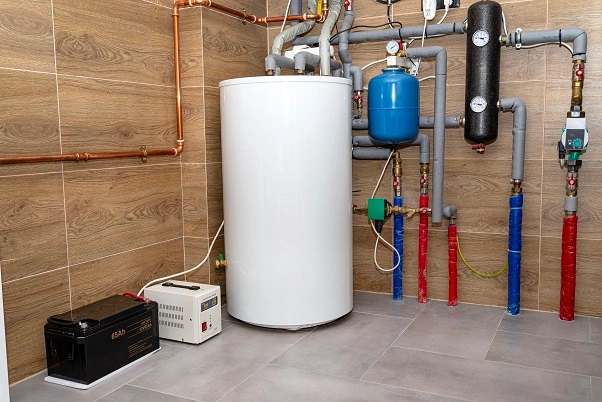
If your hot water tank is leaking, the most common reason is a faulty pressure relief valve, corroded tank body, or a loose pipe connection. In most cases, tightening fittings or replacing the valve can stop the leak — but if the leak is coming from the bottom of the tank, it usually means internal corrosion, and you’ll likely need a replacement.
This guide explains everything about hot water tank leaking, including how to identify the source, quick DIY solutions, when to call a plumber, and how to prevent future leaks for good.
Why Hot Water Tanks Leak
A hot water tank leak isn’t just inconvenient — it’s a signal that pressure, corrosion, or internal components are failing. The main reasons include:
- Pressure build-up due to lack of expansion control (thermal expansion).
- Corrosion caused by aging or mineral buildup.
- Loose connections at inlet/outlet fittings or drain valves.
- Faulty temperature & pressure (T&P) valve.
- Sediment buildup at the bottom of the tank.
Understanding where the leak starts is key to choosing the right fix.
How to Identify the Source of the Leak
Before you start repairs, unplug the power or turn off the gas supply to the heater. Then, visually inspect the following areas:
- Top of the Tank:
- Check pipe connections, cold-water inlet, and hot-water outlet.
- Look for moisture or dripping — this usually means a loose fitting or a cracked valve.
- Side of the Tank:
- Inspect around the T&P valve. If it’s wet or dripping, your system may be over-pressurized.
- Bottom of the Tank:
- If you see puddles underneath, the tank itself may be rusted through. Internal corrosion can’t be repaired — replacement is the safest option.
- Drain Valve:
- If the drain valve is leaking, it may need to be tightened or replaced.
Tip: Always dry the tank surface first — it helps pinpoint the exact leak location.
Step-by-Step Fix: What to Do When Your Hot Water Tank Is Leaking
1. Turn Off Power and Water Supply
Safety first.
- For electric heaters, switch off the circuit breaker.
- For gas heaters, turn the control knob to “Pilot” or “Off.”
Then shut the cold-water inlet valve above the tank.
2. Release Tank Pressure
Attach a hose to the drain valve and let some water out into a floor drain or bucket. This reduces internal pressure and prevents scalding while you work.
3. Inspect and Tighten Connections
Use a wrench to gently tighten fittings at the cold-water inlet and hot-water outlet. Avoid over-tightening; you may damage the threads.
4. Check the T&P Valve
If water drips from this valve, open and close it a few times to flush debris. If it continues leaking, replace the valve — it’s inexpensive and easy to find at hardware stores.
5. Examine the Drain Valve
If the leak is from here, ensure it’s fully closed. If it still leaks, replace it with a brass drain valve (they last longer than plastic ones).
6. Address Tank Body Leaks
If water seeps directly from the tank’s bottom or seam, internal rust has likely eaten through the lining. Unfortunately, this can’t be patched. You’ll need a new hot water tank or consider a tankless water heater.
When to Call a Professional
If you’ve followed all the steps above and the leak persists, it’s time to call a licensed plumber.
Seek professional help when:
- The leak is from the tank base.
- You notice brown or rusty water.
- The heater is over 10 years old.
- The leak returns after DIY tightening or valve replacement.
A certified plumber can inspect for hidden issues like thermal expansion, pressure irregularities, or internal liner failure.
How to Prevent Hot Water Tank Leaks
Preventive maintenance is far cheaper than repairs. Here are simple but effective habits to avoid leaks:
- Install a Water Heater Expansion Tank: Prevents pressure spikes that cause leaks. (Read our full guide on Water Heater Expansion Tank Installation)
• Flush your water heater twice a year to remove sediment buildup.
• Check the T&P valve every six months.
• Use a water pressure gauge — keep pressure between 50–60 PSI.
• Replace the anode rod every 3–5 years to slow corrosion.
• Inspect connections and fittings regularly for signs of moisture.
These simple steps can add years to your water heater’s lifespan and prevent expensive leaks.
Common Signs of a Failing Hot Water Tank
Not every problem is visible — here’s what to watch for before a major leak happens:
- Reduced hot water supply
- Strange popping or rumbling noises
- Rust-colored water
- Fluctuating water temperature
- Damp spots around the heater
If any of these appear, schedule a plumbing inspection right away.
Real-Life Case Study: Phoenix, Arizona (USA)
A homeowner in Phoenix noticed small puddles under their 8-year-old 50-gallon gas water heater. Initially, they thought it was condensation. However, after two days, the leak worsened.
A licensed plumber identified a faulty T&P valve and a failing anode rod. The system pressure had risen above 80 PSI, causing minor leaks and stress on the tank joints.
After replacing the valve, installing a 2-gallon expansion tank, and adjusting the pressure to 60 PSI, the leak stopped. The total repair cost was under $250, saving them from a full heater replacement worth over $1,200.
The takeaway: early inspection and pressure control prevent costly failures.
How Long Do Hot Water Tanks Last?
Most residential hot water tanks last 8–12 years, depending on maintenance and water quality.
Hard water areas (with high mineral content) may shorten lifespan due to faster sediment buildup and corrosion.
Regular flushing, pressure checks, and expansion control can extend your tank’s life to 15 years or more.
Environmental & Safety Note
According to the U.S. Environmental Protection Agency (EPA), poorly maintained water heaters waste both energy and water, increasing your carbon footprint. Keeping your heater in good shape ensures efficient heating and prevents unnecessary water loss from leaks.
You can read more on water efficiency at epa.gov/watersense.
Related Articles
Conclusion
A hot water tank leaking might start as a few drops but can quickly turn into a flood.
By identifying the source early, reducing system pressure, and maintaining your heater regularly, you can prevent costly damage.
Adding an expansion tank, checking valves, and flushing sediment twice a year are simple steps that protect your plumbing and your peace of mind.
FAQs About Hot Water Tank Leaks
1. Why is my hot water tank leaking from the bottom?
If the leak is from the bottom, your tank’s inner lining may be corroded. Unfortunately, that means it’s time for replacement.
2. Can I still use a leaking hot water heater?
No. Even small leaks can cause electrical hazards, rust, and mold. Turn off power and water immediately.
3. How do I stop a leaking T&P valve?
Try lifting and lowering the valve handle to flush out debris. If it keeps dripping, replace it with a new one.
4. Why is my new water heater leaking?
It could be loose fittings or a defective valve. Tighten connections and recheck; if the problem persists, contact your installer.
5. Is it normal for a water heater to leak a little?
A small condensation drip can happen, especially in humid areas. But steady dripping means a problem — inspect immediately.
Summary
If your hot water tank is leaking, check valves and fittings first — but if water seeps from the bottom, corrosion is the likely cause. Turn off the heater, release pressure, and inspect carefully. With timely maintenance and pressure control, you can prevent leaks, save energy, and extend your system’s life.

Ethan Wells is the author of Water Tank Guides, a blog focused on practical tips for water tank cleaning, maintenance, and installation. His mission is to help readers keep their water clean, safe, and their tanks long-lasting through simple, easy-to-follow guides.