In Phoenix, emergency water storage is more than a general disaster-preparedness item. Extreme heat, summer storms, power outages, and unexpected water-service disruptions can make having a reliable supply of drinking water especially important.
So how much should you store?
The CDC recommends at least 1 gallon of water per person per day for a minimum of three days and advises households to try to store a two-week supply if possible. It also specifically recommends considering additional water for people living in hot climates. The City of Phoenix uses the same baseline of one gallon per person per day for at least three days in its emergency-kit guidance.
For emergency water storage in Phoenix, a seven-day supply is a practical intermediate target for households that have enough storage space, while two weeks provides a stronger emergency reserve.
To calculate your household’s exact storage requirement, use our Water Tank Size Calculator Phoenix and select the household-use option.
How Much Emergency Water Storage Phoenix Do You Actually Need?
Start with the number of people in your household and the number of days you want to be prepared.
The basic formula is:
Number of people × number of days × 1 gallon = minimum emergency water supply
Remember that one gallon per person per day is a preparedness baseline, not necessarily the amount you would normally use at home.
Normal residential water consumption—including showers, toilets, laundry, dishes, and landscaping—can be much higher.
Minimum Survival Guidelines: 1 Gallon Per Person Per Day
The CDC recommends storing at least one gallon per person per day for drinking, cooking, brushing teeth, and other essential uses during an emergency. A minimum three-day supply should be available.
That means:
| Household | 3 Days | 7 Days | 14 Days |
| 1 person | 3 gallons | 7 gallons | 14 gallons |
| 2 people | 6 gallons | 14 gallons | 28 gallons |
| 4 people | 12 gallons | 28 gallons | 56 gallons |
| 6 people | 18 gallons | 42 gallons | 84 gallons |
These numbers are minimum planning amounts.
Phoenix residents should consider storing additional water because the CDC specifically notes that people living in hot climates may need more. Pregnant people, people who are ill, and households with pets may also need additional supplies.
Do not forget pets when doing your calculation.
Extended Emergency Guidelines
Three days of water is a starting point.
For Phoenix households with enough space, building toward at least seven days offers a larger margin if an outage, storm, infrastructure problem, or other emergency lasts longer than expected.
The CDC recommends trying to keep a two-week emergency supply when possible.
For a family of four, that means:
4 people × 14 days × 1 gallon = 56 gallons minimum
If you want additional capacity for higher heat-related consumption, limited washing, pets, or other uses, your real target may be higher.
Rather than guessing, enter your household size and desired backup period into our [Water Tank Size Calculator Phoenix] to estimate an appropriate storage capacity.
Why Emergency Water Storage Matters More in Phoenix
Every household benefits from emergency water, but several Phoenix conditions make a reserve particularly valuable.
Extreme Heat & Increased Water Needs
Phoenix’s heat is the biggest reason not to treat one gallon per person as an unlimited or ideal amount.
The City of Phoenix emphasizes frequent hydration during extreme heat and recommends drinking water throughout the day rather than waiting until you feel thirsty.
During a summer emergency, you could also lose air conditioning because of a power outage.
That combination matters.
If indoor temperatures rise and household members must spend time outside, hydration needs can increase. This is why the CDC specifically says hot-climate households should consider storing more than its basic emergency-water minimum.
When space and budget allow, build a buffer into your Phoenix emergency water plan rather than storing exactly the minimum amount.
Well-Dependent Households & Outage Risk
Homes relying on private wells have an additional consideration: pumping water typically depends on electrical equipment.
EPA guidance for groundwater systems emphasizes the importance of emergency power for well pumps and related water-production equipment during electrical outages.
If your home depends on a well and the power goes out, the amount of usable water available may depend on your pressure tank, storage system, pump setup, and whether you have backup power.
A dedicated water-storage tank can provide another layer of resilience.
If you use a private well, your emergency plan should include both stored drinking water and a strategy for operating or working around the well system during an extended outage.
Monsoon-Related Utility Disruptions
Phoenix’s monsoon season runs from June 15 through September 30, and storms can bring heavy rain, high winds, lightning, flash flooding, dust, and power outages.
The City of Phoenix specifically includes power-outage information in its monsoon preparedness resources and recommends residents build or restock emergency preparedness kits before storms.
Phoenix’s emergency planning documents also recognize that local thunderstorms, particularly during monsoon season, can produce widespread power failures.
Your water supply may not fail every time the electricity does, particularly if you receive municipal water. But an emergency water reserve means you are less dependent on everything continuing to operate normally.
Choosing the Right Storage Setup
Emergency water does not have to be stored in one enormous tank.
Many households benefit from combining portable water with larger stationary storage.
Small-Scale: Emergency Jugs & Barrels
For a basic three- to seven-day supply, smaller containers can be practical.
The CDC recommends commercially bottled water as the safest and most reliable emergency option. For water you fill yourself, it recommends FDA-approved food-grade water-storage containers.
Advantages of smaller containers include:
- Easy portability
- Simple rotation
- Lower upfront cost
- Easy distribution throughout the home
- Ability to take water during an evacuation
Do not reuse containers that previously held pesticides, bleach, fuel, or other toxic substances.
For many households, several containers are better than one because a damaged or contaminated container does not compromise the entire emergency supply.
Whole-Household Tank Storage
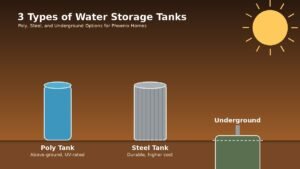
If you want weeks of storage, have a large family, rely on a private well, or want water available for uses beyond drinking and cooking, a larger water tank may make sense.
Tank storage can provide:
- Larger emergency reserves
- Backup for extended disruptions
- Water for sanitation
- Additional pet or livestock water
- Integration with selected household systems
However, not every water tank automatically provides potable drinking water.
A tank intended for drinking-water storage needs appropriate materials, sanitary plumbing, protection from contamination, and a maintenance plan.
If you are considering a permanent tank, see our Water Tank Installation Phoenix guide and use the Water Tank Size Calculator Phoenix before choosing a capacity.
Storage & Rotation Best Practices
Buying emergency water is only the first step. You also need to store it correctly and keep the supply usable.
Safe Storage Locations in Phoenix Heat
Phoenix garages and outdoor storage areas can become extremely hot.
CDC guidance recommends keeping personally filled emergency water in a cool location, ideally around 50°F to 70°F, away from direct sunlight and away from gasoline, pesticides, and other toxic materials.
That makes a climate-controlled indoor storage area preferable when practical.
Consider:
- Interior closets
- Climate-controlled storage rooms
- Cool pantry areas
- Shaded, temperature-controlled spaces
Avoid leaving emergency drinking water in direct Arizona sun.
For permanent outdoor tanks, choose a tank designed for the application and follow manufacturer recommendations for UV exposure, installation, sanitation, and temperature conditions.
Also consider weight.
One gallon of water weighs roughly 8.34 pounds.
A 55-gallon barrel can therefore hold about 459 pounds of water, while 100 gallons weighs more than 830 pounds.
Make sure floors, shelving, platforms, and tank bases can safely support the load.
How Often to Rotate Stored Water
Commercially bottled water should be stored according to the manufacturer’s expiration or best-use information.
For water you fill into your own sanitized containers, the CDC recommends replacing it every six months.
Label each container with:
- “Drinking Water”
- Fill date
- Rotation date
A simple approach is to inspect your emergency supplies twice a year.
The City of Phoenix also recommends adding a six-month reminder to review emergency kits and replace anything that has expired, spoiled, or changed.
Building a Full Emergency Water Plan
Emergency preparedness should include more than gallons in storage.
Create a plan covering:
Drinking water: Keep your primary potable reserve protected and easily accessible.
Backup water: Store additional water for sanitation and other lower-priority uses when space permits.
Pets: Calculate their needs separately.
Portable supply: Keep enough manageable containers available if you need to evacuate.
Treatment: Know how you would make questionable water safe if emergency instructions require it.
Power outages: If you depend on a private well, understand what happens to your pump when electricity is unavailable.
Heat emergencies: Plan extra capacity rather than relying only on the one-gallon minimum.
Rotation: Review and refresh personally stored water every six months.
Local alerts: Follow official Phoenix emergency information during heat, monsoon storms, flooding, and outages.
The best time to build your supply is before you need it.
Start with the three-day minimum, work toward seven days if possible, and consider the CDC’s two-week target for greater preparedness—especially in Phoenix’s hot climate.
Use our Water Tank Size Calculator Phoenix to calculate your household’s emergency capacity, then compare Water Tanks Phoenix if you need more storage than portable containers can reasonably provide.
Frequently Asked Questions
How much water should a family of 4 store for emergencies?
Using the CDC minimum of one gallon per person per day, a family of four needs at least 12 gallons for three days. A seven-day supply is 28 gallons, while a two-week supply is 56 gallons. In Phoenix, consider additional capacity because hot climates can increase water needs.
Does stored water expire?
Commercially bottled water should be used according to the manufacturer’s date. Water that you fill into your own sanitized food-grade containers should be replaced every six months according to CDC guidance.
Is tap water safe to store long-term in Phoenix heat?
Clean water can be stored in properly cleaned and sanitized food-grade containers, but extreme heat is not the preferred storage condition. The CDC recommends keeping personally stored emergency water at approximately 50°F–70°F, away from sunlight and toxic chemicals, and replacing it every six months. In Phoenix, a cool indoor area is therefore preferable to an extremely hot garage or exposed outdoor location.
Where is the safest place to store emergency water in a hot climate?
Choose a cool, dark location away from direct sunlight, fuel, pesticides, cleaners, and other chemicals. A climate-controlled interior closet or storage area is generally better than a hot Phoenix garage when adequate space is available. Make sure the floor or shelf can safely handle the weight of the stored water.
Should I store more than one gallon per person per day in Phoenix?
It is worth considering. One gallon is the CDC’s minimum planning amount, and the agency specifically recommends considering more water for people living in hot climates, as well as for pregnant people, people who are sick, and pets.