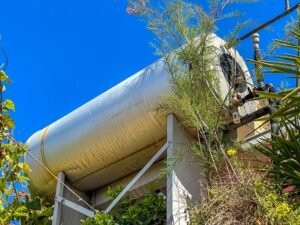

If you are considering adding extra water storage to your property, understanding the water tank installation cost in Phoenix can help you set a realistic budget. The final price depends on the size and material of the tank, whether it is installed above or below ground, site preparation requirements, plumbing connections, and labor. A straightforward residential installation may be relatively affordable, while a large-capacity or underground system can cost several thousand dollars.
Before budgeting for installation, it helps to know what size you actually need — our Water Tank Size Calculator can give you a starting number based on your household or irrigation use.
Water Tank Installation Cost in Phoenix
The water tank installation cost in Phoenix can vary considerably from one property to another. A 2026 local cost estimate from Angi puts water or fuel tank installation in Phoenix at roughly $593 to $2,155 for typical projects, with an average of about $1,357. More complex specialty or underground installations can cost considerably more.
These figures should be treated as general estimates rather than fixed prices. Your actual quote will depend on tank capacity, material, accessibility, plumbing requirements, foundation work, permits, and any additional equipment needed.
What Affects Water Storage Tank Installation Cost?
Several factors influence the water storage tank installation cost for a Phoenix property.
Tank Size
Tank capacity is one of the biggest pricing factors. A small tank intended primarily for landscape irrigation will usually cost less than a large system designed to provide significant backup water storage. For a sense of how far a common size actually goes, see our breakdowns of the 500 gallon and 1,000 gallon tank sizes.
Larger tanks can also increase installation expenses because they may require heavier equipment, additional labor, stronger foundations, and more extensive plumbing.
Aboveground vs. Underground Installation
Aboveground tanks are typically easier and less expensive to install because they require less excavation.
Underground tanks involve digging, soil removal, backfilling, structural preparation, and additional labor. Phoenix’s soil conditions and property accessibility can further affect excavation expenses.
Local estimates cited by Angi place aboveground tank installation at roughly $415 to $1,040, while underground installations may range from about $1,550 to $3,100.
Tank Material
Your choice of material also affects the overall water storage tank cost.
Common options include:
- Polyethylene or plastic tanks
- Fiberglass tanks
- Steel tanks
- Composite tanks
- Concrete storage systems
Plastic tanks are often popular for residential water storage because they are relatively lightweight and resistant to corrosion. Steel, fiberglass, and specialty tanks may be preferred where greater capacity, durability, or specific installation requirements are involved.
Site Preparation
A water tank needs a stable and properly prepared base.
Depending on the system, preparation may include grading the site, compacting soil, installing gravel, constructing a concrete pad, or excavating an underground location.
Arizona Department of Water Resources guidance notes that water storage tanks should be positioned on level pads in locations that are not vulnerable to settling, erosion, or slope failure.
Poor site preparation can create costly problems later, including tank movement, damaged plumbing, uneven weight distribution, or leaks.
Plumbing and Pump Equipment
Buying the tank is only one part of the project.
A complete installation may require:
- Water supply and outlet pipes
- Shutoff valves
- Overflow connections
- Pumps
- Filters
- Pressure equipment
- Irrigation connections
- Gutters and downspouts for rainwater collection
A simple gravity-fed system can cost substantially less than a pressurized water storage system with pumps, filters, and automatic controls.
How Much Does the Water Storage Tank Cost?
The water storage tank cost itself depends primarily on capacity, construction material, and manufacturer.
Smaller residential tanks can be relatively affordable, while large-capacity tanks can represent a significant investment before installation labor is even included.
When comparing quotes, determine whether the advertised price includes only the tank or the complete system. A low tank price may not include delivery, foundation work, plumbing, pumps, fittings, labor, excavation, or permits.
For this reason, comparing complete installed prices is usually more helpful than comparing tank prices alone.
Is a Water Storage Tank Useful in Phoenix?
Water storage can be particularly useful for irrigation, rainwater harvesting, emergency planning, and reducing reliance on treated drinking water for certain outdoor applications.
The Arizona Department of Water Resources notes that rainwater harvesting can reduce the use of drinking water for landscape irrigation. More advanced harvesting systems can collect rainwater in tanks or cisterns and use filters or pumps for distribution.
Phoenix also encourages residents to improve water efficiency because of the city’s desert environment. Homeowners interested in reducing outdoor water consumption can explore the City of Phoenix water conservation resources for conservation programs, incentives, guidance, and water-saving ideas.
A properly planned storage system can complement these conservation efforts, particularly when stored rainwater is used for landscape irrigation.
Additional Costs to Consider
When budgeting for a tank, remember that the installation quote may not include every expense.
Possible additional costs include:
- Tank delivery
- Concrete foundation or gravel base
- Excavation
- Plumbing modifications
- Water pumps
- Filtration systems
- Electrical connections
- Overflow drainage
- Gutters and downspouts
- Permits
- Existing tank removal
- Landscape restoration
Ask contractors for an itemized estimate so you know exactly what is included.
How to Keep Installation Costs Under Control
Start by determining how much water storage you actually need. An oversized system can increase both equipment and installation costs without providing meaningful additional value.
It also helps to choose an accessible installation location. Difficult access can require additional workers, cranes, excavation machinery, or longer plumbing runs.
Get estimates from multiple qualified installers and compare the entire scope of work rather than choosing based solely on the lowest quote.
Each estimate should ideally explain the tank type and capacity, preparation work, labor, plumbing components, pumps or filtration equipment, and warranty coverage.
Aboveground or Underground Water Tank?
For many homeowners, an aboveground system is the more economical option. It is generally easier to install, inspect, maintain, repair, and replace.
Underground tanks preserve usable yard space and keep the storage system less visible, but installation is considerably more complicated.
Before choosing between the two, consider:
- Available property space
- Desired tank capacity
- Budget
- Appearance
- Accessibility
- Maintenance requirements
- Soil conditions
- Plumbing layout
The least expensive tank is not always the best long-term option. The goal should be to choose a system that suits both your property and intended water use.
Getting an Accurate Water Tank Installation Quote
Online estimates are useful for initial planning, but an on-site assessment is the best way to determine your actual project cost.
A professional installer can evaluate the tank location, soil conditions, required capacity, plumbing connections, equipment needs, and access for installation machinery.
Before accepting a quote, ask whether the price includes the tank, delivery, foundation preparation, installation labor, plumbing, pumps, permits, cleanup, and warranty.
Final Thoughts
The cost of installing a water storage tank in Phoenix can range from a relatively modest investment for a simple aboveground system to several thousand dollars for larger or underground installations. Tank capacity, material, site preparation, plumbing, pumps, excavation, and labor all influence the final price.
Understanding both the water tank installation cost and the complete water storage tank installation cost will help you compare estimates more accurately. Instead of focusing only on the initial water storage tank cost, consider the entire installed system and its long-term maintenance requirements before making a decision.