
If you are preparing for a power outage, wildfire, water-system failure, or another disaster, you may be wondering how much water does a family of 4 need in an emergency. A good starting point is at least one gallon of water per person per day. For a family of four, that means storing at least 12 gallons for three days. In Arizona, where extreme heat can increase hydration needs, keeping additional water beyond the basic emergency supply is a smart precaution.
How Much Water Does a Family of 4 Need in an Emergency?
The Centers for Disease Control and Prevention recommends storing at least one gallon of water per person per day for at least three days. This water is intended for drinking, cooking, brushing teeth, and other essential uses during an emergency.
For a family of four, the basic calculation is simple:
| Emergency Period | Water for 4 People |
| 1 day | 4 gallons |
| 3 days | 12 gallons |
| 7 days | 28 gallons |
| 14 days | 56 gallons |
Therefore, the emergency water supply for a family of 4 should contain at least 12 gallons for a basic three-day emergency.
However, the CDC also advises that households should consider keeping as much as a two-week water supply when possible. For four people, a two-week supply equals approximately 56 gallons of water.
How Much Water Does a Family of 4 Need in Arizona?
If you are specifically asking how much water does a family of 4 need in Arizona, it is worth considering the state’s extreme heat.
The one-gallon-per-person-per-day recommendation provides a useful emergency preparedness baseline, but Arizona families may want to keep additional water available, especially during summer.
The Arizona Department of Health Services warns that extreme heat is a serious health risk in the state and emphasizes staying hydrated throughout the day rather than waiting until you feel thirsty.
Arizona’s hot and dry conditions can increase fluid needs, particularly for people spending time outdoors. Children, older adults, outdoor workers, and people exercising in the heat may also need more drinking water.
For that reason, an Arizona household should consider 12 gallons for four people as a minimum three-day emergency reserve rather than an ideal maximum.
How Much Emergency Water Should a Family of 4 Store?
For short emergencies, 12 gallons gives a family of four the standard three-day minimum.
A seven-day emergency supply would require about 28 gallons, while a two-week supply would require approximately 56 gallons.
If you have enough storage space, working toward the two-week level provides significantly more flexibility. A longer water reserve may be particularly useful when dealing with wildfire evacuations, extreme heat, infrastructure failures, contamination events, or prolonged power outages.
You also do not have to build your emergency supply all at once. A household could begin with 12 gallons and gradually increase its supply until it has enough water for one or two weeks.
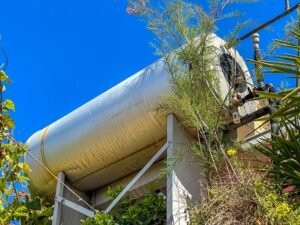
If 56 gallons sounds like more than a shelf of jugs can handle, a small dedicated tank is often simpler to manage — see our 500 Gallon Water Tank guide for how far that size actually goes.
Why Arizona Families May Need Extra Emergency Water
Arizona presents some emergency-preparedness challenges that make reliable access to water especially important.
Extreme temperatures can cause the body to lose water rapidly. Arizona health officials advise residents to carry water and drink regularly during hot weather. They also note that hydration needs vary based on activity, environment, age, health conditions, and other factors.
Water emergencies can also happen at the same time as extreme heat. For example, a power outage may affect pumps or other infrastructure while air-conditioning is unavailable. In those circumstances, having additional drinking water at home can become particularly valuable.
This is why emergency water storage for families in Arizona should account not only for the number of people in the household but also for climate, pets, medical needs, and potential emergency duration.
What Is the One-Gallon-Per-Person Rule?
The one-gallon rule is an easy way to calculate how much water to store for 4 people or any other household size.
The formula is:
Number of people × number of days × 1 gallon = minimum emergency water supply
For example, a household with four people preparing for seven days would calculate:
4 people × 7 days × 1 gallon = 28 gallons
Keep in mind that this is an emergency planning baseline. Actual drinking needs may differ, and some of the stored water may also be needed for preparing food, brushing teeth, and basic hygiene.
Who May Need Additional Water?
Not every household has identical water requirements. You should consider increasing your emergency supply when your household includes infants, pregnant or breastfeeding people, older adults, pets, people with certain medical conditions, or anyone who regularly works or exercises outdoors.
The CDC specifically notes that pregnant or lactating people may need additional water in an emergency kit.
Pets also need their own emergency water supply. Their water should be calculated separately rather than taken out of the amount stored for household members.
What Type of Water Should You Store?
Commercially bottled water is generally the simplest emergency storage option. The CDC describes unopened commercially bottled water as the safest and most reliable emergency water source.
Store water in a cool location away from direct sunlight, gasoline, pesticides, household chemicals, and other substances that could contaminate the containers.
If you store tap water yourself rather than purchasing bottled water, use food-grade water storage containers designed for that purpose and follow appropriate cleaning and storage practices.
It is also helpful to check your emergency water supply periodically so that damaged, leaking, or expired containers can be replaced.
Where Should You Store Emergency Water in Arizona?
Arizona heat makes storage location especially important.
Avoid leaving your main emergency water supply in direct sunlight or extremely hot areas when you have a safer indoor storage option. A cool, dark pantry, closet, interior storage room, or other suitable location is generally preferable.
For a large emergency supply, consider spreading containers across more than one safe location. This makes the supply easier to handle and reduces the chance of losing all your stored water if one storage area becomes inaccessible.
Families may also want a smaller supply in their vehicles or evacuation kits, while keeping the majority of their emergency water at home.
Arizona residents can also use the state’s official Arizona Heat Preparedness resources, which provide information about heat safety, hydration stations, cooling centers, and emergency preparedness.
How to Build an Emergency Water Supply for a Family of 4
You do not need to purchase 56 gallons immediately. Build your emergency water storage gradually.
A practical approach is to start with enough water for three days and then expand it. Your priorities can include:
- Start with 12 gallons for a three-day supply.
- Increase to 28 gallons for one week.
- Work toward 56 gallons for two weeks when space and budget allow.
- Store additional water for pets and people with greater hydration needs.
- Keep some portable bottles ready for evacuation.
- Regularly inspect containers and replace water when necessary.
- Store water away from excessive heat, sunlight, fuels, and chemicals.
This approach makes emergency preparation more manageable while giving your household increasingly better protection.
Don’t Forget Water for Pets
If your family of four also has pets, their water requirements need to be added separately.
How much a pet needs depends on its species, size, diet, activity, health, and weather conditions. Arizona heat can also increase an animal’s hydration needs.
Do not assume that your family’s 12-gallon three-day supply includes enough water for pets. Plan an additional reserve specifically for them.
What Happens If Your Stored Water Runs Out?
During some emergencies, public officials may issue boil-water notices or warnings that tap water is unsafe.
The correct treatment method depends on the type of contamination. Boiling or disinfecting can make water safer from many germs, but water contaminated with fuel or toxic chemicals cannot necessarily be made safe through ordinary home treatment. The CDC advises following official emergency instructions when drinking water safety is uncertain.
This is another reason why keeping a dedicated supply of safe drinking water is preferable to relying entirely on treating questionable water after an emergency begins.
Frequently Asked Questions
How many gallons of water does a family of 4 need for 3 days?
A family of four should store at least 12 gallons of water for a three-day emergency based on the minimum guideline of one gallon per person per day.
How much water does a family of 4 need for one week?
A family of four needs approximately 28 gallons for seven days at one gallon per person per day.
How much water does a family of 4 need for two weeks?
A family of four would need approximately 56 gallons for a 14-day emergency supply.
Is 12 gallons enough for a family of 4?
Twelve gallons meets the standard minimum for four people for three days. However, storing more is preferable when possible, especially in Arizona because extreme heat can increase hydration needs.
Should Arizona families store more emergency water?
Keeping additional water is a sensible precaution in Arizona. Extreme heat, outdoor activity, household health needs, pets, and the potential duration of an emergency can all increase water requirements.
Final Thoughts
So, how much emergency water should a family of 4 store? At an absolute minimum, plan for about 12 gallons for three days. A one-week supply requires roughly 28 gallons, while a two-week reserve requires around 56 gallons.
For families in Arizona, treating the three-day amount as a starting point and maintaining additional water when practical can provide greater protection during extreme heat, power outages, wildfires, water contamination, and other emergencies.
The most important thing is to prepare before an emergency begins. Start with a three-day supply, expand it over time, account for pets and special household needs, and store your water safely. Having an adequate emergency water supply gives your family one less critical resource to worry about when normal services are disrupted.