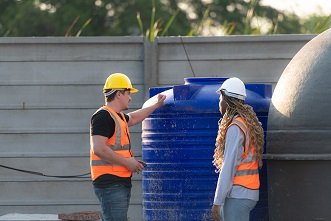
A 500 gallon water tank can be a practical storage option for Phoenix homeowners who want backup water, irrigation storage, rainwater collection, or additional water capacity without installing a very large tank.
For many residential properties, 500 gallons offers a useful middle ground: it provides significantly more storage than small 100- or 250-gallon tanks while requiring less space and usually less upfront investment than a 1,000-gallon system.
However, choosing the right 500 gallon water tank in Phoenix involves more than simply looking at capacity. Tank material, dimensions, placement, Arizona’s intense sun, installation requirements, intended water use, and available space should all be considered.
This guide explains what Phoenix homeowners should know before choosing a 500 gallon water tank.
How Much Water Does a 500 Gallon Tank Hold?
A 500 gallon water tank holds approximately 1,893 liters of water when filled to its rated capacity.
That is a substantial amount of water for a residential backup or irrigation system.
The actual usable capacity may be slightly different depending on the tank design, outlet position, plumbing arrangement, and whether space is intentionally left at the top.
A full tank is also extremely heavy. Water alone in a filled 500-gallon tank weighs more than 4,000 pounds, so a solid, level foundation is essential.
Is a 500 Gallon Water Tank Big Enough for a Home?
Whether a 500 gallon water tank is suitable for your Phoenix home depends primarily on what you plan to use the water for.
A 500-gallon tank can work well for:
- Emergency household water storage
- Landscape and garden irrigation
- Rainwater harvesting
- Supplemental well-water storage
- Outdoor cleaning
- Livestock or animal watering
- Backup water for selected household uses
- Property maintenance
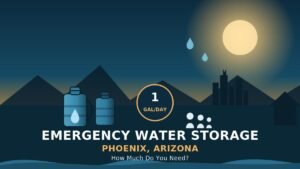
For emergency preparedness, Ready.gov recommends storing at least one gallon of water per person per day for drinking and sanitation for several days. A 500-gallon system therefore provides considerably more storage than a basic household emergency supply.
That does not mean 500 gallons will support normal whole-house water consumption for an extended period. Showers, toilets, washing machines, irrigation and other household uses can consume water quickly.
If your goal is whole-house backup water rather than emergency drinking water or landscape use, a larger tank may make more sense.
Common Uses for 500 Gallon Water Tanks in Phoenix
Phoenix homeowners use water storage tanks for several different purposes.
Emergency Water Storage
A tank can provide an additional reserve if normal water service is temporarily interrupted.
If the water will be used for drinking, select a tank specifically designed and rated for potable water storage. Some polyethylene water tanks are manufactured using FDA-compliant materials, while certain models may also have NSF certifications.
Landscape Irrigation
Phoenix properties often have desert landscaping, gardens, trees or other plants requiring supplemental irrigation.
A 500 gallon tank can be connected to an irrigation system or pump and used to store water for landscaping.
Rainwater Harvesting
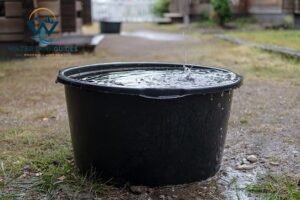
Rainwater collected from roofs can be directed into a storage tank and later used for landscape irrigation.
Because Phoenix rainfall is irregular, homeowners interested in rainwater harvesting should consider both roof catchment area and expected water demand when choosing tank capacity.
Backup Water Supply
Some homeowners use a water tank as supplemental storage rather than their primary water source.
A 500-gallon tank can be easier to incorporate into a residential lot than larger tanks while still providing meaningful reserve capacity.
Typical 500 Gallon Water Tank Dimensions
There is no single standard size for every 500 gallon water tank.
Dimensions vary significantly depending on whether the tank is vertical, horizontal, rectangular, low-profile or designed for underground installation.
For example, one 500-gallon tank configuration is approximately 4 feet in diameter and 6 feet high, while other 500-gallon models are considerably wider and shorter.
Another 500-gallon vertical model measures approximately 72 inches in diameter and 38 inches high.
This means homeowners should never plan their installation based only on capacity.
Before buying a tank, check:
- Overall diameter
- Overall height
- Lid clearance
- Outlet location
- Plumbing clearance
- Access for delivery
- Required foundation size
- Distance from walls or structures
Measure the intended installation area before ordering.
Above-Ground vs Underground 500 Gallon Water Tanks
One of the biggest decisions is whether to install the tank above or below ground.
Above-Ground Water Tanks
Above-ground tanks are generally easier to install, inspect and maintain.
Advantages can include:
- Lower installation complexity
- Easier plumbing access
- Easier leak inspection
- No excavation in many installations
- Easier replacement
- Lower installation costs
The main disadvantage in Phoenix is exposure to intense sunlight and high outdoor temperatures.
Underground Water Tanks
An underground tank keeps the storage system out of sight and saves usable yard space. Below-ground conditions may also provide more temperature stability.
However, excavation, backfill, access risers, plumbing and site preparation make installation more complicated.
Most importantly, an ordinary above-ground polyethylene tank should never simply be buried. Standard above-ground tanks are not designed to withstand soil pressure and can collapse. A tank installed underground must be specifically engineered and rated for burial.
Poly vs Steel Water Tanks
Phoenix homeowners will commonly encounter polyethylene and steel tanks.
Poly Water Tanks
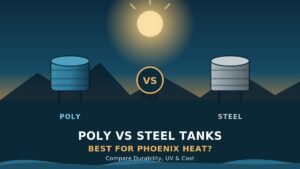
Polyethylene tanks are popular for residential water storage because they are lightweight relative to steel, corrosion-resistant and available in many shapes and sizes.
Advantages include:
- No rust
- Relatively easy installation
- Lower weight when empty
- Wide range of capacities
- Many potable-water options
- UV-stabilized models available
Manufacturers offer UV-stabilized polyethylene specifically for prolonged outdoor use.
Steel Water Tanks
Steel tanks can offer excellent structural strength and may be preferred for certain large, permanent or specialized installations.
However, homeowners should consider:
- Higher weight
- Transportation requirements
- Corrosion protection
- Coatings or liners
- Installation complexity
- Long-term maintenance
For a straightforward residential 500-gallon installation, poly is often the easier material to handle, while steel may make sense where durability, appearance or a specific engineered application is the priority.
Arizona Heat and Sun Considerations
Phoenix’s climate deserves special attention when selecting an outdoor water tank.
The tank should be designed for outdoor exposure and manufactured with appropriate UV protection. Several water-tank manufacturers use UV-stabilized polyethylene specifically to reduce degradation from prolonged sunlight.
An opaque tank can also reduce the amount of sunlight reaching the stored water, which can help discourage algae growth. Black and other sufficiently opaque tanks are commonly used for this reason.
For Phoenix installations, consider:
- UV-stabilized tank material
- An opaque tank where appropriate
- Shade when practical
- Manufacturer temperature limits
- Heat-rated valves and fittings
- Expansion around plumbing connections
- Keeping the tank away from unnecessary heat sources
Do not assume every polyethylene tank has the same temperature rating. Manufacturer specifications should always be checked for the exact model.
How Much Does a 500 Gallon Water Tank Cost?
The price of a 500 gallon water tank can vary widely.
Tank-only pricing depends on the manufacturer, shape, material, certification, wall thickness and intended application. Current market examples show that basic poly tank pricing can fall within several hundred dollars, while specialized 500-gallon freestanding models can exceed $1,200 before installation.
The tank itself is only part of the total project cost.
Factors Affecting Price
Your final cost may include:
- Tank purchase price
- Shipping or local delivery
- Concrete or compacted base
- Pumps
- Valves
- Pipes
- Fittings
- Filters
- Level indicators
- Overflow plumbing
- Pressure equipment
- Excavation
- Electrical connections
- Labor
- Permits where required
An underground system typically has substantially more installation work than a simple above-ground tank.
For an accurate Phoenix price, compare quotes based on the complete installed system, not simply the tank price.
Installation Considerations for Phoenix Homes
A 500 gallon tank requires proper site preparation.
Because a filled tank weighs several thousand pounds, it needs a stable, level surface capable of supporting the full load.
A typical installation may involve a concrete slab or another base designed according to the tank manufacturer’s requirements.
You should also consider:
Access
Make sure the tank can physically reach the installation location. Gates, walls, air-conditioning equipment and narrow side yards can make delivery difficult.
Plumbing
Determine where the inlet, outlet, overflow and drain will be located before positioning the tank.
Pump Requirements
Gravity flow may be sufficient for certain applications, but irrigation or household systems often require a pump.
Overflow
Rainwater harvesting and automatic-fill systems need properly planned overflow drainage.
Maintenance Access
Leave enough space around the tank to inspect fittings, clean the tank and replace equipment.
Local Requirements
Permit requirements can depend on the location and scope of the project. The City of Phoenix notes that many residential improvements involving plumbing or construction require permits and inspections. In unincorporated Maricopa County, permitting resources specifically list water/septic tank projects among residential permit categories.
Check applicable requirements before excavation, structural work or major plumbing modifications begin.
500 Gallon vs 1000 Gallon Water Tank
A common question is whether to buy a 500 gallon or 1,000 gallon tank.
| Feature | 500 Gallon Tank | 1000 Gallon Tank |
| Storage Capacity | Moderate | High |
| Space Required | Less | More |
| Initial Cost | Usually lower | Usually higher |
| Installation | Generally easier | May require more preparation |
| Emergency Storage | Good | Better for extended reserves |
| Irrigation | Small to moderate needs | Moderate to larger needs |
| Residential Lots | Easier to fit | Requires more available space |
A 500 gallon water tank may be the better option if space is limited or your water-storage needs are supplemental.
A 1,000-gallon tank may make more sense when water availability, irrigation demand or longer-term backup capacity is the priority.
How to Choose the Right Water Tank Size
Do not choose tank size based only on what fits in your yard.
Start by asking what the water will be used for.
Consider:
- Number of people in the household
- Drinking-water requirements
- Emergency storage goals
- Landscape irrigation demand
- Garden size
- Rainwater collection potential
- Frequency of tank refilling
- Available installation space
- Budget
- Future water needs
For occasional irrigation or emergency backup, 500 gallons may provide plenty of capacity.
For whole-house backup, large properties, extensive irrigation or locations where the tank cannot be refilled frequently, 1,000 gallons or more may be more appropriate.
The Arizona Department of Water Resources conservation resources also provide useful information for homeowners interested in water-efficient landscaping and rainwater harvesting.
FAQs About 500 Gallon Water Tanks in Phoenix
How much water does a 500 gallon tank hold?
A 500 gallon tank stores approximately 1,893 liters of water at its rated capacity.
Is a 500 gallon water tank enough for a house?
It can be enough for emergency storage, irrigation or supplemental household use, but it may be too small for extended normal whole-house consumption.
How big is a 500 gallon water tank?
Dimensions vary by manufacturer and tank shape. Some models are approximately four feet wide and six feet tall, while low-profile models may be wider and much shorter. Always check the exact manufacturer’s dimensions before installation.
Can a 500 gallon poly tank stay outside in Phoenix?
Yes, provided the specific tank is designed for outdoor use and suitable for the expected conditions. UV-stabilized polyethylene tanks are manufactured specifically to withstand prolonged outdoor exposure.
Can I bury an above-ground water tank?
No. Above-ground tanks generally cannot withstand surrounding soil pressure. Use a tank specifically manufactured and rated as an underground cistern.
Is a black water tank better for Phoenix?
Opaque tanks, particularly black tanks, reduce light transmission and can help limit algae growth. However, UV resistance depends on the tank’s resin formulation and manufacturer specifications, not color alone.
Is poly or steel better for a 500 gallon water tank?
Poly is lightweight, rust-resistant and commonly used for residential storage. Steel provides high structural strength but may require additional corrosion protection and more complicated installation.
How much does a 500 gallon water tank cost in Phoenix?
Pricing varies by brand, material, configuration, delivery and installation. The complete cost should include the tank, foundation, plumbing, fittings, pump equipment and any required site work.
Should I buy a 500 or 1000 gallon tank?
Choose 500 gallons when space, budget or moderate storage needs are the priority. Consider 1,000 gallons when you need a larger emergency reserve, more irrigation capacity or less frequent refilling.
Can a 500 gallon tank store drinking water?
Yes, but the tank must be specifically suitable for potable-water use, and the stored water must be managed and maintained appropriately. Look for manufacturer documentation confirming suitability for drinking-water storage.
Final Thoughts
A 500 gallon water tank in Phoenix can be a practical choice for homeowners who need emergency water storage, irrigation capacity, rainwater collection or a supplemental water reserve.
The right system depends on more than tank capacity. Phoenix homeowners should pay particular attention to UV resistance, outdoor temperature ratings, tank material, foundation requirements, available installation space and whether the tank is intended for potable water.
For smaller residential properties and moderate storage needs, a 500 gallon water tank offers a useful balance between capacity, footprint and cost. For larger irrigation systems or extended whole-house backup, comparing a 500-gallon system with a 1,000-gallon tank before purchasing can help avoid undersizing the system.