A greywater storage system Phoenix homeowners can use can collect water from showers, bathroom sinks, bathtubs, and clothes washers and redirect it for landscape irrigation. A properly designed system can reduce the amount of fresh water used for outdoor watering, but Phoenix-area homeowners need to follow Arizona’s greywater requirements.
For most residential applications, the goal is not to store greywater for long periods. Instead, the system should collect, manage, and distribute greywater efficiently while preventing standing water, odors, mosquito problems, and accidental contact.
What Is a Greywater Storage System Phoenix?
A greywater storage system collects wastewater from selected household fixtures and makes it available for approved non-potable uses, mainly landscape irrigation.
In Arizona, greywater can come from clothes washers, bathtubs, showers, and bathroom sinks. Water from toilets, kitchen sinks, and dishwashers is not considered residential greywater for this type of reuse because of the higher contamination risk.
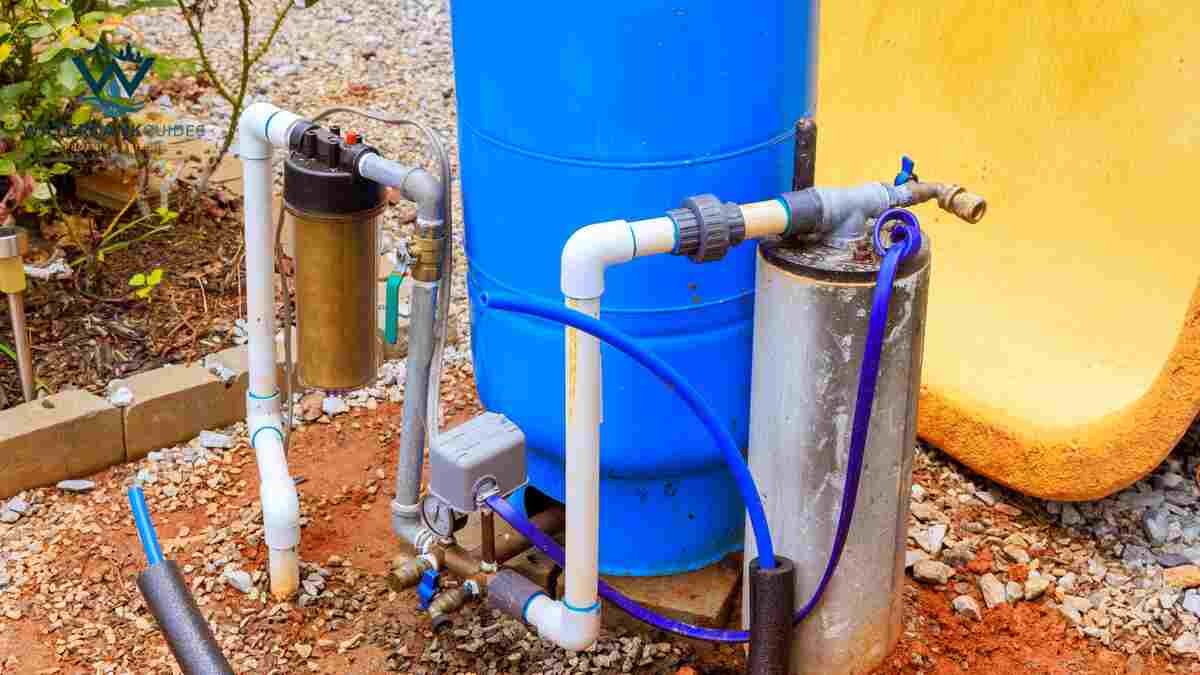
A typical system may include a diverter valve, collection plumbing, filter or screen, surge tank, pump when needed, irrigation lines, and an overflow connection back to the sewer or approved wastewater system.
The storage component is important, but it should not be treated like a conventional potable water storage tank. Greywater contains soaps, detergents, hair, lint, oils, and other materials, so holding it for extended periods can create odors and other problems.
How Greywater Storage Works in Phoenix
A basic residential system usually follows this process:
Household fixture → collection pipe → filter or screening → surge/storage tank → irrigation distribution → landscape
For example, water from a washing machine can be diverted through a dedicated greywater line. Depending on the system design, it may flow directly to a landscape irrigation zone or enter a covered surge tank before being distributed.
A storage tank can provide short-term buffering when greywater production and irrigation demand do not happen at exactly the same time. The system should be sized around actual household water use rather than simply choosing the largest available tank. Homeowners can also use our water tank volume calculator to understand how tank capacity is calculated.
However, Arizona’s guidance emphasizes minimizing the time greywater is held in surge tanks. The tank should be covered and secured to restrict access and reduce mosquito habitat and other vector concerns.
Greywater should also remain separate from potable-water plumbing. Clear identification of non-potable piping helps reduce the risk of accidental cross-connection.
Do You Need a Permit for Greywater in Phoenix?
Arizona allows certain private residential greywater systems without an individual permit when they meet the conditions of the applicable Type 1 general permit. Homeowners should check the current requirements before installing or modifying a system because local site conditions and the type of project can affect what approvals are required.
According to the Arizona Department of Environmental Quality’s greywater guidance, qualifying residential greywater use must remain below 400 gallons per day and meet specific conditions for collection, storage, irrigation, groundwater separation, and system operation.
For residential use, greywater can come from clothes washers, bathtubs, showers, and bathroom sinks. The system must also meet several conditions, including:
- Avoiding human contact with greywater.
- Keeping greywater within the property boundary.
- Avoiding spray irrigation.
- Using flood or drip irrigation for surface application.
- Preventing standing water.
- Keeping the system outside a floodway.
- Maintaining the required vertical separation from the greywater application area to the seasonally high groundwater table.
- Covering greywater surge tanks.
- Providing a way to stop or redirect greywater if the system becomes blocked or overloaded.
- Clearly identifying pressure piping that could be confused with potable water piping.
Because regulations can change, the ADEQ guidance should be checked before construction rather than relying only on older articles or general greywater information.
Greywater Storage Tank Requirements
A greywater storage tank is different from a drinking-water tank.
The main purpose is to temporarily manage greywater rather than preserve it as a potable water supply. Tank selection should therefore focus on sanitation, access control, durability, drainage, maintenance, and compatibility with the system.
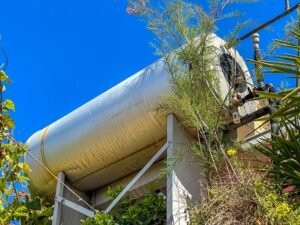
A practical residential storage setup may use a sealed or covered plastic tank designed for non-potable water applications. The exact tank size depends on the amount of greywater generated and how quickly the landscape can use it.
Important features include:
Covered Construction
The tank should be covered and secured. This helps prevent people and animals from accessing the water and reduces the chance of mosquitoes using the tank as a breeding site.
Easy Cleaning
Greywater can carry lint, hair, soap residue, and sediment. A tank with an accessible inspection and cleaning point makes maintenance easier.
Proper Overflow
An overflow or backup route is important if the tank fills faster than the irrigation system can use the water.
Non-Potable Identification
Greywater piping should be clearly identified where there is a possibility of confusion with drinking-water plumbing.
Short Holding Time
Avoid designing a system that keeps greywater stored for long periods. The longer organic material and detergents remain in the tank, the greater the possibility of odors and poor water quality.
How Large Should a Greywater Tank Be?
There is no single tank size that works for every Phoenix home.
The correct size depends on:
- Number of people in the household
- Number of showers and baths
- Clothes-washing frequency
- Bathroom sink use
- Daily greywater production
- Landscape size
- Soil type
- Irrigation method
- Plant water requirements
- How frequently irrigation occurs
For example, a small household with a washing machine and limited landscape may need only a relatively small surge tank. A larger property with several greywater sources may require greater temporary storage capacity.
The key is to size the system around greywater production and irrigation demand, rather than simply choosing the largest tank available.
Oversizing can be counterproductive if the tank routinely holds water longer than necessary.
Above-Ground vs. Underground Greywater Storage
Both above-ground and underground configurations can be used, but the right choice depends on property layout, plumbing access, landscape design, and local requirements.
| Feature | Above-Ground Tank | Underground Tank |
| Installation | Usually easier to access | More excavation required |
| Maintenance | Easier inspection | More difficult access |
| Space | Requires visible space | Saves surface space |
| Plumbing access | Generally simpler | More complex |
| Cost | Often lower installation complexity | Excavation can increase project cost |
| Leak inspection | Easier to identify | Can be harder to detect |
| Best suited for | Accessible residential systems | Properties where surface space is limited |
An above-ground tank can be practical when there is enough side-yard or service-area space. Underground storage may make sense when appearance and available surface space are major concerns, but excavation and access need to be considered carefully.
Where Can You Use Stored Greywater?
For a residential system operating under Arizona’s basic greywater conditions, approved uses include household gardening, composting, and landscape watering.
Greywater is particularly useful for non-potable landscape applications because it can offset some freshwater irrigation demand.
However, greywater should not simply be sprayed across a yard.
Arizona’s current guidance specifies flood or drip methods for surface application and prohibits spray irrigation for this type of residential greywater use.
Food-producing plants also require special attention. Surface application of untreated residential greywater should not be used for food plants, with the applicable exception for trees and shrubs where the edible portion does not come into contact with the greywater.
What Should Not Go Into a Greywater System?
The quality of the water entering the system matters almost as much as the tank itself.
Do not intentionally route water containing hazardous chemicals into a residential greywater system.
Examples include wastewater associated with:
- Solvents
- Antifreeze
- Greasy or oily materials
- Car-part cleaning
- Certain household chemicals
- Water used to wash diapers or similarly infectious garments
Detergents and cleaning products also deserve attention. Some greywater may contain sodium, chlorides, borax, sulfates, or other compounds that can affect soil and plants.
Choosing landscape-safe products can help reduce the impact of greywater irrigation on soil and vegetation.
Greywater System Maintenance in Phoenix
Phoenix’s hot, dry climate makes proper system management especially important.
A greywater storage tank should be inspected regularly for sediment, lint, buildup, leaks, damaged fittings, and blocked screens. If your property also has a conventional water storage tank, our water tank cleaning guide explains general cleaning and maintenance practices that can help you understand how sediment and buildup affect stored water systems.
The filter or screening component should be cleaned according to the system design. If the filter becomes clogged, water can back up into the house or stop flowing to the irrigation area.
The irrigation area should also be checked. Look for standing water, unpleasant odors, unusually wet soil, blocked emitters, or water flowing outside the intended landscape zone.
If the system develops a blockage, backup, or overload, greywater use should stop until the problem is corrected.
Common Phoenix Greywater System Problems
Bad Odors
A strong odor can indicate that greywater is being held too long or that the tank is not being properly managed.
Reducing holding time and improving system flow can help address the problem.
Clogged Filters
Hair, lint, sediment, and soap residue can accumulate in filters and irrigation components.
Regular inspection and cleaning can reduce clogging.
Standing Water
Standing greywater can create sanitation and mosquito concerns. The irrigation system should distribute water at a rate the soil and landscape can absorb.
Tank Overflow
An undersized storage or distribution system can fill faster than the landscape uses the water.
A properly designed overflow or backup route is therefore an important part of the system.
Plant Damage
Not every plant responds well to greywater. Detergent ingredients and salts can affect soil conditions and plant health, particularly when greywater is repeatedly applied to the same area.
Greywater Storage System Cost Factors in Phoenix
The cost of a greywater storage system in Phoenix depends heavily on the type and complexity of installation.
A simple washing-machine diversion system can be much less complicated than a whole-house system that collects water from showers, bathroom sinks, and laundry.
Major cost factors include:
- Storage tank size
- Tank material
- Excavation
- Plumbing modifications
- Diverter valves
- Filters
- Pumps
- Irrigation piping
- Drip irrigation components
- Electrical work
- Professional design or installation
- Site conditions
- Required approvals
Because residential properties differ significantly, it is better to evaluate the complete system rather than compare tank prices alone.
A low-cost tank may not produce a low-cost project if extensive plumbing, excavation, pumping, or irrigation work is required.
Greywater Storage vs. Direct Diversion
A storage tank is not always necessary.
A direct-diversion system can route greywater from a source such as a washing machine directly to an appropriate landscape area when the system is designed and operated according to applicable requirements.
Storage becomes more useful when there is a timing mismatch between water production and landscape demand.
For example, a washing machine may produce greywater in the afternoon while the landscape needs irrigation at another time. A short-term surge tank can help balance that difference.
The important point is that storage should solve a specific system problem rather than simply add a large tank to the property.
How Greywater Fits Into Phoenix Water Conservation
Greywater is one part of a broader water-conservation strategy.
Arizona’s water agencies recognize greywater harvesting as a way to reduce potable-water use for landscape irrigation. Greywater can work alongside drought-tolerant landscaping, efficient irrigation, soil improvements, and other water-saving practices.
For homeowners, the greatest benefit usually comes from designing the entire landscape around the available water rather than generating more greywater than the property can safely use.
FAQs About Greywater Storage Systems in Phoenix
Can I use greywater at my Phoenix home?
Yes. Arizona allows certain private residential greywater uses when the system follows the applicable conditions. Residential greywater under the basic Type 1 framework must be less than 400 gallons per day and must be used for approved purposes such as landscape watering, gardening, or composting.
What can be stored in a greywater tank?
A greywater storage or surge tank can temporarily hold water collected from approved household sources such as showers, bathtubs, bathroom sinks, and clothes washers.
The tank should be covered, secured, and designed so that greywater is not held unnecessarily long.
How big should a greywater storage tank be?
There is no universal tank size for every Phoenix home. The appropriate capacity depends on household greywater production, irrigation demand, landscape size, soil conditions, and the time between collection and irrigation.
Can greywater be sprayed on a lawn?
No. Arizona’s residential greywater requirements prohibit spray irrigation. Surface application should use approved flood or drip distribution methods.
Can kitchen sink water go into a greywater system?
No. Arizona’s residential greywater definition does not include kitchen sink or dishwasher wastewater. Toilet wastewater is also excluded.
Does a greywater tank need to be covered?
Yes. Arizona’s requirements call for greywater surge tanks, when used, to be covered to restrict access and reduce mosquito and other vector habitat. The holding time should also be minimized.
Final Thoughts
A greywater storage system Phoenix homeowners install can be a practical way to reuse water from showers, bathroom sinks, bathtubs, and clothes washers for landscape irrigation.
The most important part is not simply choosing a large storage tank. A successful system needs the right collection plumbing, appropriate storage or surge capacity, safe irrigation distribution, overflow protection, maintenance access, and compliance with Arizona’s greywater requirements.
For many homes, a simple system that moves greywater efficiently to the landscape may be more practical than a large storage setup. If storage is needed, choose the capacity based on actual household production and irrigation demand rather than maximum possible volume.
Before installing or modifying a system, check the current requirements that apply to your Phoenix property and make sure the design protects potable-water plumbing, prevents standing water, and keeps greywater use within approved limits.